
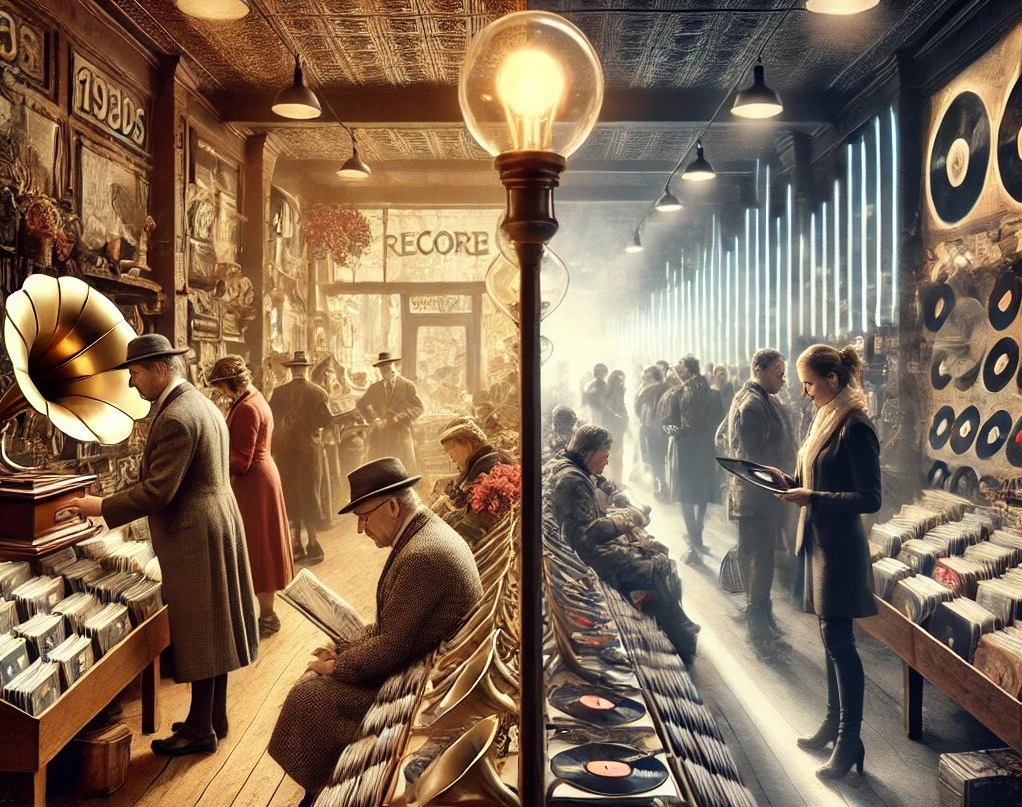
Vinyl has come a long way since its debut in the 1930s, evolving through decades of highs and lows. Today, collectors scour online record stores for classic vinyl, hunt down rare original press vinyl, and treasure used records with the same reverence as music itself. But how did we go from vinyl’s golden era to the digital age, and why is it making such a massive comeback? In this article, we’ll trace the fascinating journey of vinyl consumption—from its rise, decline, and resurgence—revealing how it went from being the dominant format to an enduring symbol of musical passion and nostalgia.
It was all about the tangible—the smooth turn of the record, the weight of the sleeve, the big, beautiful artwork on display.
**The Golden Age of Vinyl (1930s-1960s)**
Picture it: the 1930s, and vinyl is the life of the party—sitting center stage on turntables, spinning with ease while crooners like Frank Sinatra serenade audiences. Vinyl was the format, the go-to way to consume music. It wasn’t just a way to listen; it was an experience. Much like the first time you try a vintage cocktail, vinyl was all about craftsmanship and quality. By the 1950s and ’60s, it had solidified its place in homes, with iconic albums pressing on 33s and 45s, ready to be cherished by families and music lovers alike. The larger 12-inch discs (think of them like the grand vinyl album cover that screams “art”) were the crown jewels, and everyone had their favorites. From jazz to rock ’n’ roll, vinyl was the medium through which every genre made its mark. It was all about the tangible—the smooth turn of the record, the weight of the sleeve, the big, beautiful artwork on display. The needle dropping felt almost like magic. Like that first taste of a perfectly brewed coffee, it was something that was savored. No one could have predicted how things would change, but vinyl was riding high, and it seemed like it would never lose its shine.
**Vinyl’s Decline – The Rise of the Cassette and CD (1970s-1990s)**
Then, as the ’70s rolled around, vinyl began to lose its crown. The rise of the cassette tape in the ’80s was like a sneaky little cousin crashing the family reunion. Convenient, portable, and perfect for car rides, cassettes made vinyl look like it belonged in a museum. Meanwhile, CDs came along and were hailed as the shiny, futuristic upgrade, leaving vinyl looking a little like your grandparent’s rotary phone. These new formats promised “better” sound, portability, and, crucially, no annoying pops and scratches. Vinyl wasn’t the “cool” choice anymore; it was bulky, easily scratched, and not exactly friendly to a world on the go. Music consumption shifted from the ritual of spinning records to the instant gratification of CDs and, eventually, the digital download era. Vinyl, once the undisputed champion of music lovers, took a backseat to convenience. It became something of a niche hobby, stored away in closets and attics, only rediscovered by the most dedicated collectors. It was like watching a once-legendary rock band slowly fade from the spotlight, only to be remembered fondly by the die-hard fans. But little did anyone know—vinyl was about to make a spectacular comeback.
People wanted the experience again—the crackle before the first note, the anticipation of flipping a record, and of course, the album art, big and bold, staring back at you.
**Vinyl’s Resurgence – A New Age of Music (2000s-Present)**
Fast forward to the 2000s, and vinyl’s resurgence was like the greatest comeback tour in music history. It started small—a few collectors dusting off their turntables, the odd crate of used records popping up in thrift stores. But over time, vinyl’s appeal grew, and before anyone could blink, it was a full-blown revival. Streaming had made music more accessible than ever, but it lacked the soul and authenticity that vinyl offered. People wanted the experience again—the crackle before the first note, the anticipation of flipping a record, and of course, the album art, big and bold, staring back at you. Vinyl wasn’t just about the music; it was about the culture, the tangible connection to the music. It was like the difference between listening to a song on your phone while walking to work and attending a live concert with your friends. Online record stores started popping up, and suddenly, everyone had access to not only used records but original press vinyl and limited-edition releases. Vinyl had gone from “vintage” to “essential.” It’s not just a format; it’s a lifestyle. And today, it’s thriving, proving that sometimes, the best things in life are the ones that never truly go out of style.
From its peak in the mid-20th century to its decline and eventual resurgence, vinyl has proven to be far more than just a format for music—it’s a cultural phenomenon. Whether it’s the nostalgic charm of classic vinyl, the hunt for rare original press vinyl, or the thrill of exploring used records in online record stores, vinyl’s journey is a testament to its timeless appeal. Today, it stands stronger than ever, as collectors and music lovers seek a deeper, more immersive listening experience. Vinyl’s rise, fall, and rise again show that some things, once loved, are never truly lost.


Leave a comment
Your email address will not be published. Required fields are marked *